
The Project
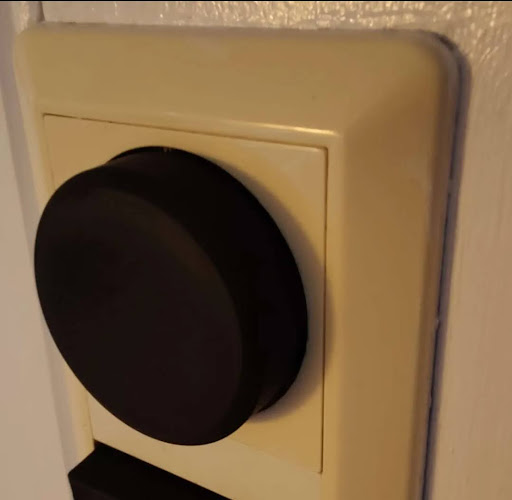
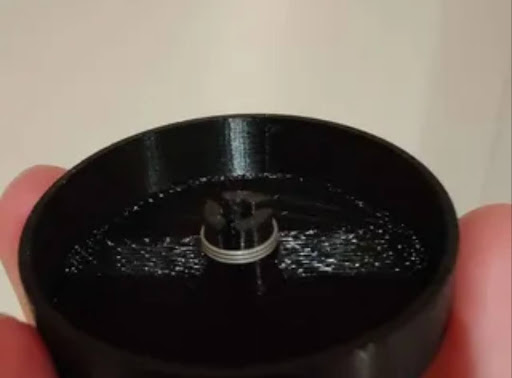
This replacement dimmer was made for users with a broken original. I used the broken piece for design choices. But as the original was broken beyond practical use, I found another model online to use for measurements. Keeping that model’s connection point, while adjusting all other aspects.
One issue I faced with the original design was that one user would occasionally break theirs, as a result of clicking the dimmer at an angle. I realized that it was breaking along the layer lines. I came up with a few different solutions, like reinforcing the weaker areas, or changing the dimmer shape. However, I found the most effective way of handling the problem, to be to print the dimmer standing, shifting the weak layer lines. With the new print process, the applied pressure would no longer be on the layer lines, alleviating the problem.
Like most of my prints, the design was created in Maya, and sliced in Bambu Studio, and printed on a personal Bambu Labs P1P printer. It was later published on printables.com for public use.
The model I found online was true to the original, though I found this to be impractical for printing and would come out with significant layer lines.
Therefore, I recreated the majority of the dimmer. I made it larger with a flat top surface, with a shorter rounded edge. This would make printing significantly easier, faster, and far more visually appealing in my opinion. The added size would also let the user grip the dimmer easier.
One issue I faced with the original design was that one user would occasionally break theirs, as a result of clicking the dimmer at an angle. I realized that it was breaking along the layer lines. I came up with a few different solutions, like reinforcing the weaker areas, or changing the dimmer shape. However, I found the most effective way of handling the problem, to be to print the dimmer standing, shifting the weak layer lines. With the new print process, the applied pressure would no longer be on the layer lines, alleviating the problem.
Like most of my prints, the design was created in Maya, and sliced in Bambu Studio, and printed on a personal Bambu Labs P1P printer. It was later published on printables.com for public use.
One issue I faced with the original design was that one user would occasionally break theirs, as a result of clicking the dimmer at an angle. I realized that it was breaking along the layer lines. I came up with a few different solutions, like reinforcing the weaker areas, or changing the dimmer shape. However, I found the most effective way of handling the problem, to be to print the dimmer standing, shifting the weak layer lines. With the new print process, the applied pressure would no longer be on the layer lines, alleviating the problem.
Like most of my prints, the design was created in Maya, and sliced in Bambu Studio, and printed on a personal Bambu Labs P1P printer. It was later published on printables.com for public use.
The model I found online was true to the original, though I found this to be impractical for printing and would come out with significant layer lines.
Therefore, I recreated the majority of the dimmer. I made it larger with a flat top surface, with a shorter rounded edge. This would make printing significantly easier, faster, and far more visually appealing in my opinion. The added size would also let the user grip the dimmer easier.
One issue I faced with the original design was that one user would occasionally break theirs, as a result of clicking the dimmer at an angle. I realized that it was breaking along the layer lines. I came up with a few different solutions, like reinforcing the weaker areas, or changing the dimmer shape. However, I found the most effective way of handling the problem, to be to print the dimmer standing, shifting the weak layer lines. With the new print process, the applied pressure would no longer be on the layer lines, alleviating the problem.
Like most of my prints, the design was created in Maya, and sliced in Bambu Studio, and printed on a personal Bambu Labs P1P printer. It was later published on printables.com for public use.